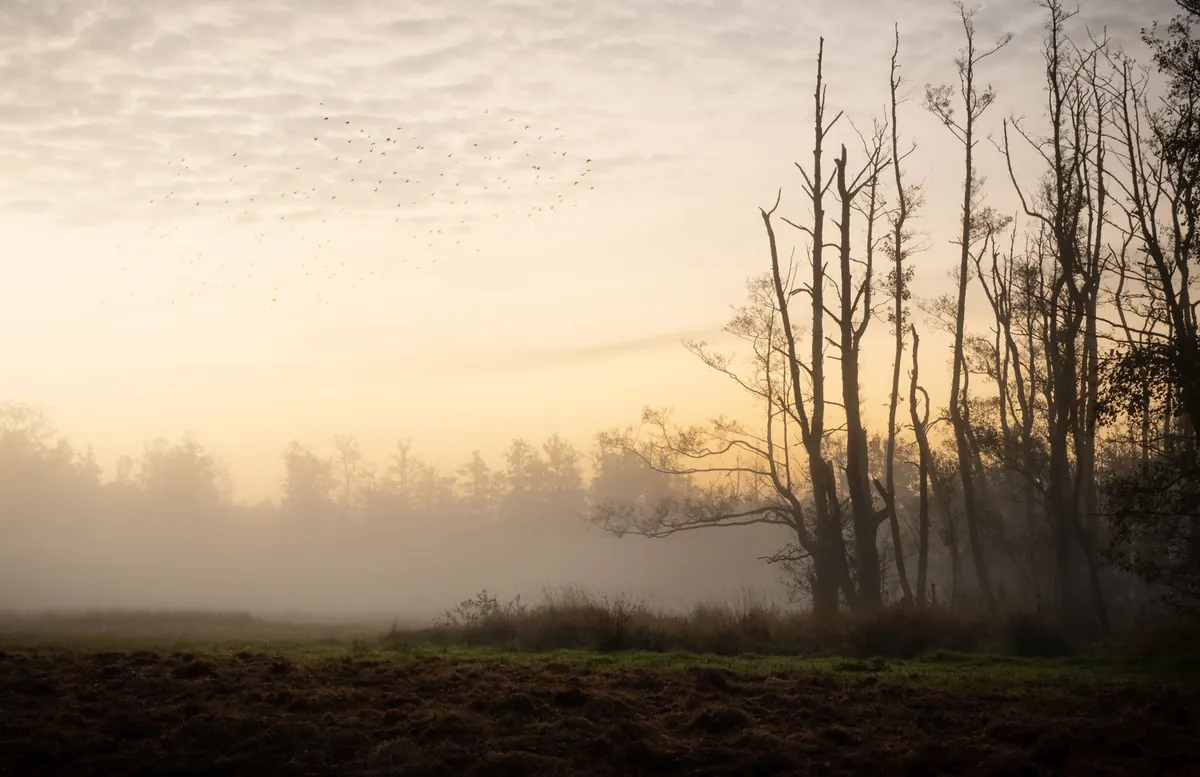
Set an alarm for half past four on a morning in late April and step outside. There is no traffic, no lawnmower, just a robin singing somewhere in the half-light. Then a blackbird starts from a rooftop, a song thrush answers from the top of a lime tree, and within twenty minutes the whole street sounds as though it has been rewired. The dawn chorus is not one event but a slow build, and once you know who sings when, it becomes far easier to follow.
Why the chorus happens at dawn
Song in spring has two jobs: claiming a territory and attracting a mate. Both are urgent, and the hour before sunrise is a good time to do them for reasons that are mostly practical.
There is light, but not enough to feed. A bird can see well enough at first light to find a perch and spot a rival, but insects and caterpillars are still hard to find. Singing fills a window that would otherwise be wasted.
Sound carries. Dawn air is often cool, still and damp, with little wind and almost no human noise. A song delivered at first light reaches more ears than the same song at noon, and it reaches them clearly.
The audience is listening. Rival males are on their territories and females are weighing up mates. Singing from a favourite perch is a cheap way to advertise without patrolling the whole boundary.
As the light improves, feeding becomes worthwhile and the chorus thins out. A shorter version often happens in the early evening, but it rarely matches the morning.
The running order
Broadly speaking, the chorus follows the light. Species that see well in low light tend to start first, and those that need more light join later. Timings shift with weather, cloud and how far north you are, but a rough sequence for a May morning in Britain looks like this:
- Before sunrise: robin, song thrush, blackbird.
- Around first light: wren, great tit, dunnock, chaffinch.
- Soon after: blue tit, goldfinch, greenfinch, chiffchaff.
- Sunrise and later: wood pigeon, collared dove, house sparrow.
Wind and rain quieten things dramatically. A still, mild, overcast morning is often the best of all, partly because the birds are not competing with the sound of moving leaves.
Five songs worth learning first
You do not need dozens. These five cover most of what you will hear in a garden, a park or a suburban street in spring, and each has one feature that makes it recognisable once you have heard it twice.
Robin
High, thin and crystal clear, with a wistful, questioning feel. Phrases tumble out with small pauses between them, and the notes stay separate rather than blurring together. Robins sing almost all year, including winter evenings under street lights, so this is a voice you can practise with in December. They are often the first birds of the day, sometimes well before anything else has stirred.
Blackbird
Low, rich and fluty, and noticeably unhurried. Phrases are short and separated by clear gaps, as though the bird is thinking between them. A blackbird on a chimney pot at 4.45am is one of the easiest songs to learn, because you can usually see the singer against the sky. Learn its alarm call too: a sharp, chinking rattle that warns of a cat or a sparrowhawk before you spot either.
Song thrush
Louder and sharper than a blackbird, and the giveaway is repetition. A song thrush sings a short phrase two or three times before moving on to the next one. Think of someone repeating a sentence to make sure you heard it. Birds often sing from an exposed treetop, head thrown back, and can be heard on a wet morning when almost everything else has gone quiet.
Great tit
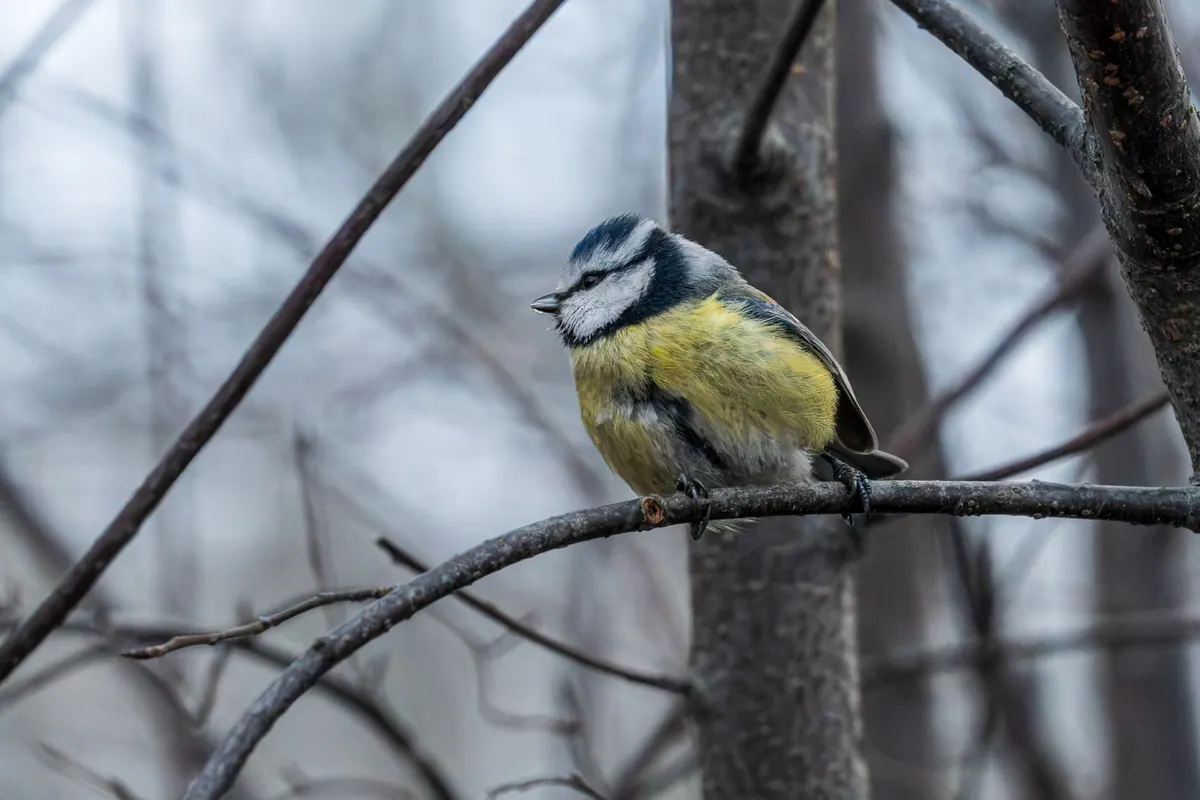
The two-note “tea-cher, tea-cher” is the one most people already know. Less familiar is the ringing, slightly nasal seesaw the same bird uses, which sounds like a rusty bicycle pump worked slowly. The tone is metallic, the phrases short and repeated. Great tits are often still singing in mid-morning, long after the thrushes have stopped.
Wren
An enormous sound from a very small bird. The song is a hurried, whirring burst of rattles and trills, usually only three or four seconds long, ending abruptly as though a switch has been flicked. It is very high and very fast. Wrens often sing from low cover and will go two or three times in a row as they work along a hedge, which gives you a chance to find the singer.
Listening tips that actually help
- Arrive early. Be in position at least half an hour before sunrise. Joining halfway through means you miss the sequence, which is the most useful clue you have.
- Stand still. Footsteps on gravel and rustling jackets mask the high frequencies that separate a wren from a great tit. Give it two motionless minutes before you decide what you can hear.
- Learn one bird at a time. Pick a species, listen to recordings the day before, then go and find it outside. Five songs in your first spring is a good return.
- Cup a hand behind your ear. It works as a crude reflector and makes distant song noticeably clearer.
- Record what you hear. A phone microphone often catches detail you miss in the moment. Play it back later and name it at your leisure.
- Treat identification apps as prompts, not verdicts. They are useful for narrowing the options, but they get things wrong, particularly with mimics and background noise. Confirm with your eyes where you can.
Your first fortnight of dawn listening
- Pick one patch and stick with it: a garden, a park, a churchyard, a stretch of towpath. Knowing the place makes unfamiliar voices stand out.
- Check the sunrise time and set your alarm for 45 minutes before it. If you manage only one early start a week, make it a still, mild, cloudy morning.
- Write down the first three songs you hear, with the time. Do this
Photo: Niklas Jeromin / Pexels